

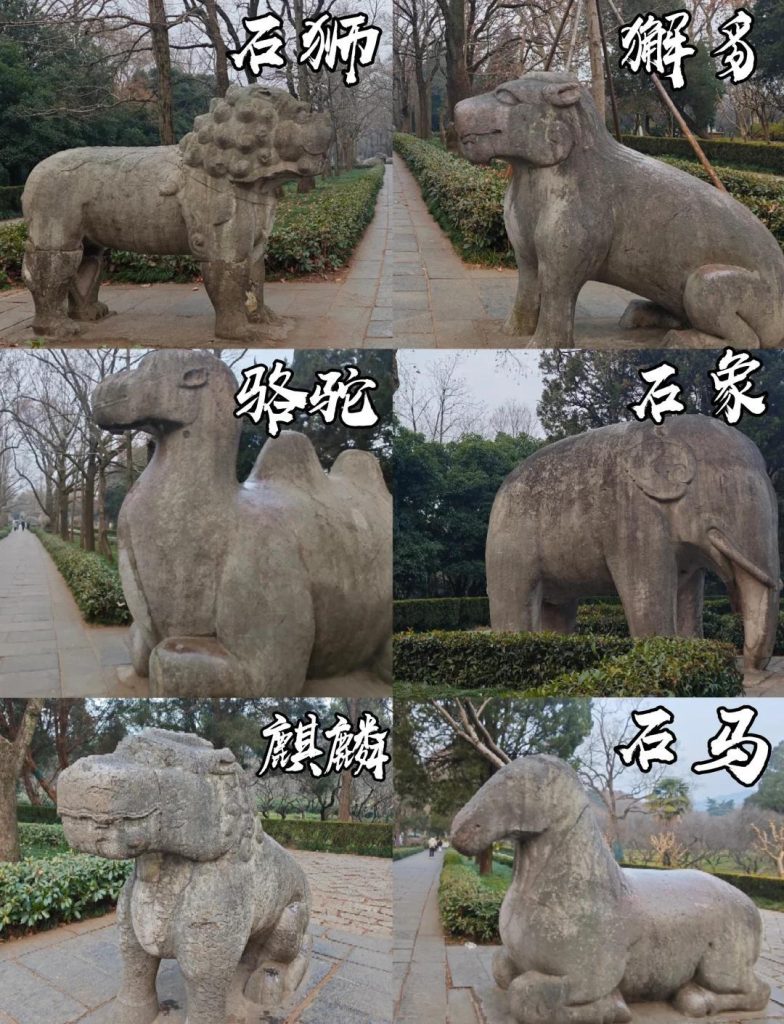
Some people read books. I read elephants. And camels. And a justice-dealing mythical beast called a xiezhi, whose posture says more about Ming political philosophy than any scroll I’ve ever opened.
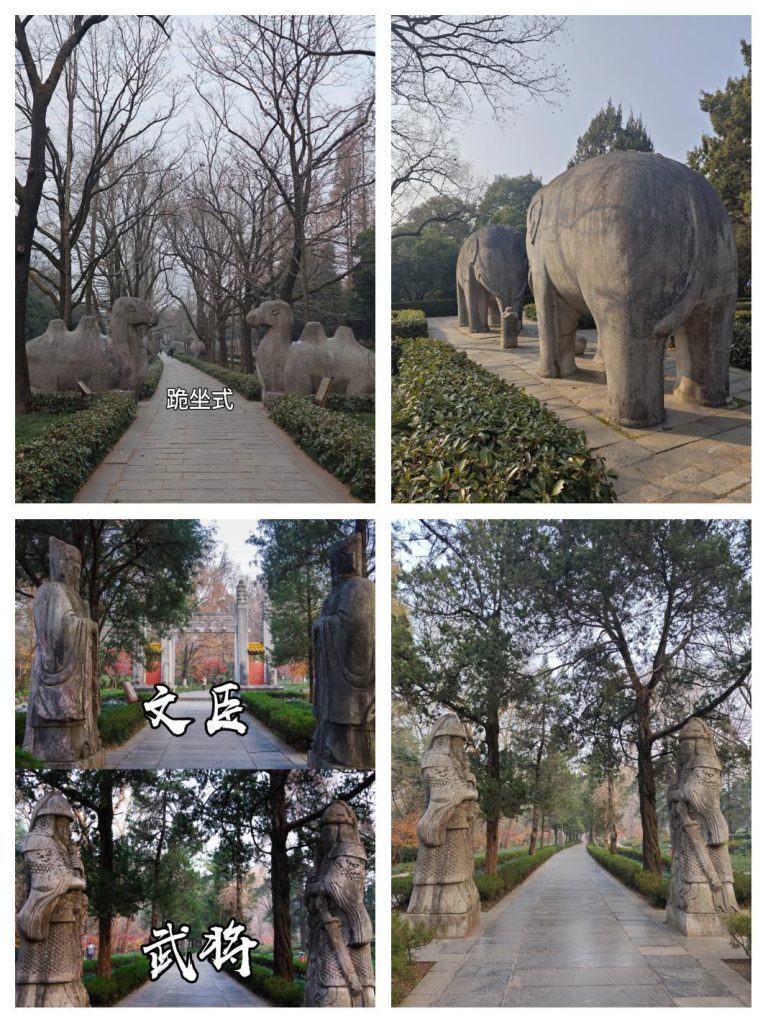
The first time I walked the Sacred Way of Ming Xiaoling in Nanjing, I thought it was just a 600 meter zoo of imperial stone statues. Impressive? Sure. But also repetitive. Twelve pairs of animals, each carved from bluestone, aligned like silent guardians. It wasn’t until I started treating them less like decorations and more like documents that the path began to speak.
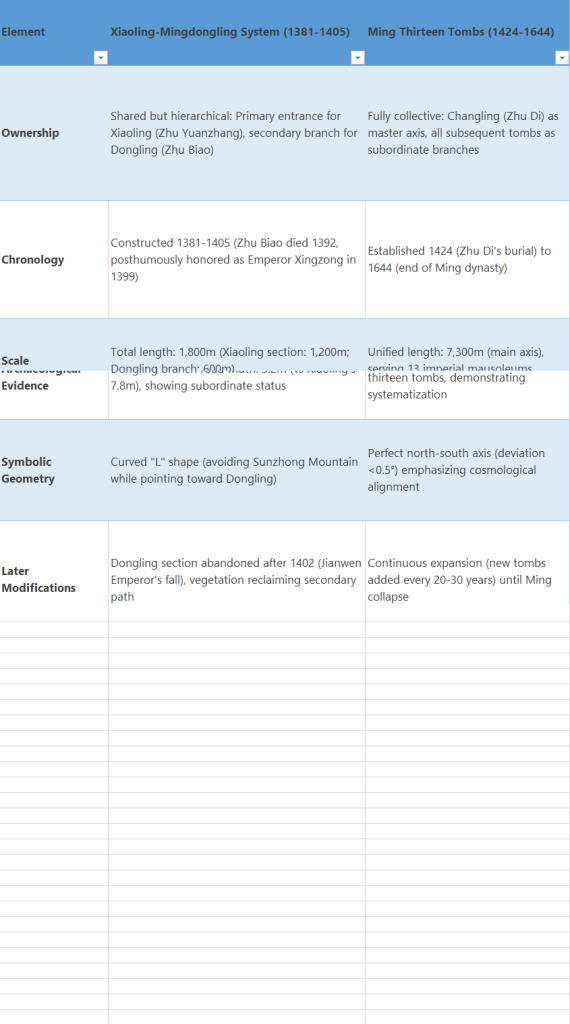
As I researched, a new narrative emerged—one not just etched in stone, but in slope, material density, and symbolic choreography. I learned the path wasn’t only for Zhu Yuanzhang, the founding Ming emperor. It also once led to Dongling, the tomb of his son Zhu Biao, an heir who never ruled, and whose lineage was erased after Yongle’s usurpation. Suddenly, each beast became a messenger. The lions and elephants roared imperial authority. The camels whispered dreams of Central Asia. The xiezhi forward-leaning, 17 scales per flank embodied Zhu Biao’s unfinished legal reforms. Even the path’s 2.9% elevation gradient wasn’t an accident; it forced mourners to feel the weight of transition, both physical and political.
Then came Yongle, and with him, a rewrite. At the Thirteen Tombs near Beijing, the animal lineup was cut in half. Elevation flattened. Postures standardized. Even the xiezhi once dynamic was frozen into a stiff bureaucrat of stone. What had been a father-son dialogue in sculpture became a monologue of state power.
This is what excites me most about studying history: not just what happened, but how it’s told, retold, or in this case recarved.
I used to think history lived in textbooks. But increasingly, I find it in sidepaths and silences. In the weathering of secondary stone. In the awkward dimensions of a 5.2 meter branch road that once mattered, but no longer leads anywhere. In the decision to give civil and military officials matching 3.2 meter heights equal in death, if not in life.
These details might seem trivial. But to me, they’re the handwriting of the past. They reveal that history isn’t flat, it’s layered. Political memory gets inscribed, revised, and sometimes deliberately erased, all in the name of “continuity.” The closer I look, the more I realize that every record, whether stone or paper has a voice and a motive.
That’s the kind of historian I want to become: one who not only cites archives but listens to architecture. One who reads landscapes and questions what’s missing. UCLA’s emphasis on interdisciplinary historical approaches, combining archaeology, art history, and political theory, aligns perfectly with my obsession with alternative archives. I don’t just want to learn about dynasties; I want to decode their secrets from the ground up, quite literally.
And maybe, one day, I’ll return to that winding sacred way, not just as a curious teenager counting animal pairs, but as a historian who knows: every beast remembers something. The question is whether we’re still listening.