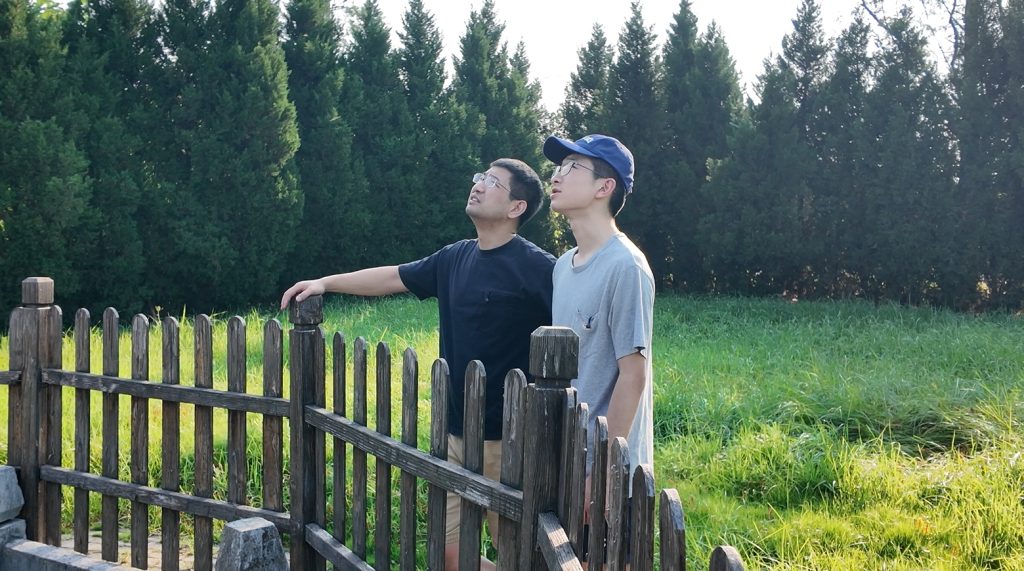

“Buzz… buzz… buzz.” The steady hum of the drone filled the blistering summer air as my father and I prepared for our mission at the tomb of Xiao Jing. As the American historian David McCullough once said, “History is who we are and why we are the way we are.” Today, under a blazing 109°F sun, we weren’t just flying a drone, we were bridging centuries, uncovering stories etched in stone and shadow.
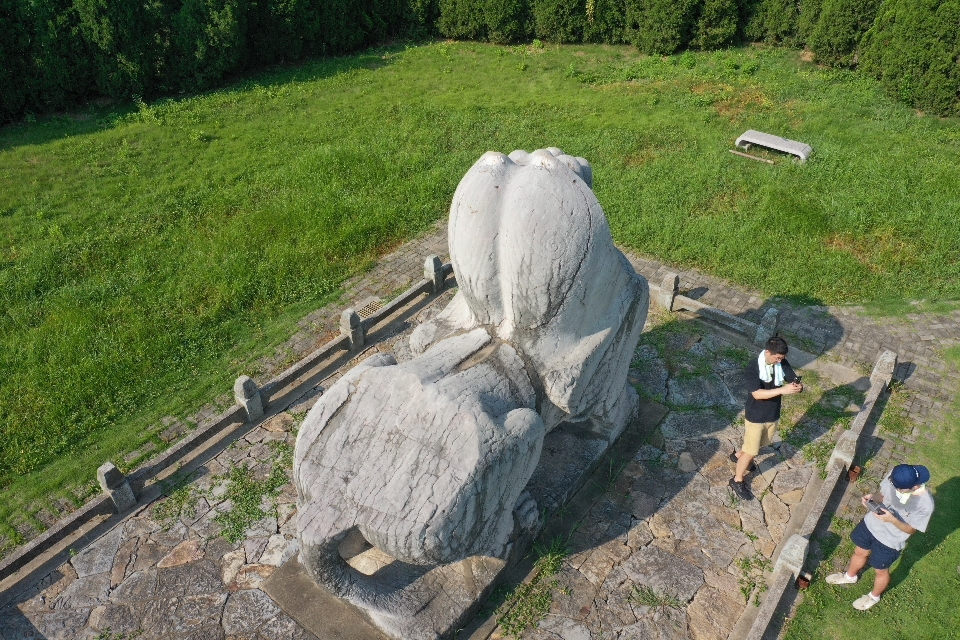
Xiao Jing (477–523), cousin to Emperor Wu of Liang, was no ordinary figure. At 19, he governed a county praised as “the best-managed city of a hundred.” Later, he led troops to defend the region, famously defeating a 70,000 strong army and earning reverence in court. His tomb’s stone huabiao, elegant, rare, and carved with mirrored script, has inspired Nanjing’s iconic guardian symbol.
Despite the heat that felt like an open oven, my father quipped, “Is this a drone survey or a sauna session for our flying machine?” I chuckled, “At least it doesn’t complain; better keep it airborne!” Together, we combined modern technology with ancient history, deepening my respect for Xiao Jing’s legacy and strengthening our father and son bond, two explorers making history come alive, one flight at a time.